UNBELIEVABLE! An insider has revealed the first words spoken after 𝑘𝑖𝑙𝑙𝑒𝑟 Christa Pike woke up following a failed execution — and they left everyone stunned. Christa Pike, 50, was 𝑠𝑒𝑛𝑡𝑒𝑛𝑐𝑒𝑑 𝑡𝑜 𝑑𝑒𝑎𝑡ℎ 𝑓𝑜𝑟 𝑡ℎ𝑒 1995 𝑚𝑢𝑟𝑑𝑒𝑟 of Colleen Slemmer, a classmate at the Knoxville Job Corps Center. She was due to be 𝑒𝑥𝑒𝑐𝑢𝑡𝑒𝑑 on September 30, but the female 𝑘𝑖𝑙𝑙𝑒𝑟 has now regained consciousness and can speak in hospital. While authorities are blaming one another, and many following the case are calling for her sentence to be reduced, Pike’s FIRST WORDS after waking up silenced the room…

No public source has reported a dramatic “first words” line from Christa Pike after she regained consciousness. Lawyers said on October 6 that she is conscious and speaking. The only words witnesses have attributed to her are from the chamber itself. What follows is a news account of what is actually on the record.
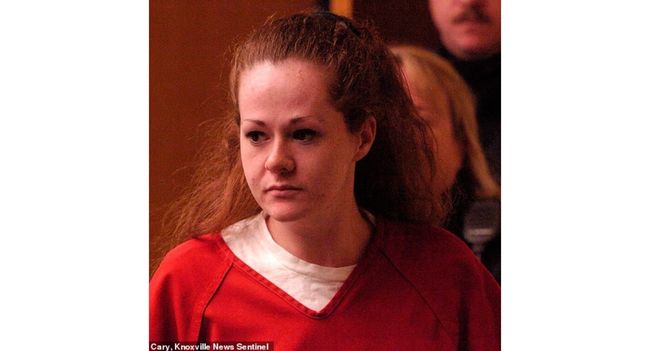
Christa Pike is awake and speaking in a Nashville-area hospital a week after Tennessee failed to carry out her execution, her lawyers said on October 6. She is 50. She was sentenced to death for the 1995 murder of Colleen Slemmer, a classmate at the Knoxville Job Corps Center. The state tried to put her to death on September 30 with two doses of pentobarbital. She survived. Her attorneys called the recovery medically unprecedented and said her prognosis remains unclear.

“Against all odds, Christa Pike is conscious, speaking, and continues to receive critical medical care,” her legal team said in a statement. “Her recovery is medically unprecedented. Her prognosis remains unclear but, at a minimum, we expect a long recovery.” They said both arms were severely damaged and that she remains handcuffed and shackled to the bed. They also said she is the only person known to have survived a complete execution attempt in the United States in which the drug actually entered her body. Criminologist Deborah Denno of Fordham Law School told the BBC she was “absolutely astonished.” In earlier survival cases, Denno said, executioners never got the drug into a vein.
That is the public record of her speech since she woke. Lawyers have not released a transcript, a bedside quote, or any line that “silenced the room.” They said they had not yet been allowed to visit her themselves. A person holding her power of attorney has seen her and has been directing her care. The state has not identified that person. Claims circulating in viral posts about a specific first sentence after she opened her eyes are not in the BBC, Reuters, or USA TODAY accounts of the October 6 update.

What witnesses did hear was earlier, in the death chamber at Riverbend Maximum Security Institution in Nashville. Media witnesses said the first dose went in at about 7:30 p.m. Central Time. At 7:34 p.m., WKRN journalist Tori Gessner reported, Pike said: “My arm feels like it’s about to burst open.” Associated Press accounts carried a similar line: she asked whether that was normal. For the next half hour she took deep breaths, snored, yawned, and moved. Gessner said the witnesses looked at one another and realized she was still alive. Curtains closed at 7:46 p.m. and opened three minutes later, after what lawyers described as a second syringe. Reporters said she then snored, grunted, and made choking sounds. At 8:05 p.m. the curtains closed again. Journalists were kept out for about 50 minutes, then ordered to leave. Pike was taken by ambulance to hospital.
Her lawyers filed an emergency motion while the procedure was still underway, saying she had lost consciousness, still had a heartbeat, and was audibly snoring. Dr. Joel Zivot, an Emory University physician retained by the defense as a medical expert, told the BBC she likely never reached a blood level of pentobarbital high enough to stop breathing and circulation. Defense filings said IV access took about an hour and multiple attempts. They believe lines were placed badly or veins blew, so some or all of the drug went into tissue rather than the bloodstream. By October 2 they described her as unconscious, on a ventilator, with arms burned, blistered, and swollen, while staff tried to clear the drug from her system. Zivot later told the Associated Press that being off the ventilator and able to speak “bodes well,” but that she was not free of serious risk.
The night was already chaotic before the injections. Pike had been set for 10 a.m. She would have been the first woman executed in Tennessee in more than 200 years, and the first person the state has executed in the modern era who was a teenager at the time of the crime. The U.S. Court of Appeals for the Sixth Circuit granted a last-minute stay over arguments about childhood sexual abuse. The U.S. Supreme Court lifted that stay in a 6–3 decision. Governor Bill Lee had already denied clemency on September 28. The attempt began nearly ten hours late.
Lee ordered a comprehensive third-party review and postponed the only other execution still on the 2026 calendar, that of Gary Wayne Sutton, which had been set for December 3. Department of Correction Commissioner Frank Strada, who oversaw this attempt and a failed execution of Tony Carruthers in May, was reported to be resigning. Pike’s lawyers called the protocol secretive and said their warnings about her veins had been ignored. Attorney Stephen Ferrell said the prolonged restraint and repeated attempts to find a vein were the outcome she had feared most as a survivor of sexual abuse, and he called it cruel and unusual punishment. Her team has asked Lee to commute the sentence to life without parole. The governor’s office had not answered USA TODAY’s questions on commutation as of the October 6 reports.
The crime that put her on death row is not in dispute in the courts. On January 12, 1995, Pike, then 18, and her 17-year-old boyfriend, Tadaryl Shipp, lured 19-year-old Colleen Slemmer into woods in Knoxville. Prosecutors said Slemmer was a romantic rival. They said Pike and Shipp tortured her, that Pike cut her throat and crushed her skull with a rock, and that Pike later showed a piece of the skull. Shipp received life in prison because he was 17 and not eligible for death. Pike was convicted and sent to death row. She has also been described in court records as having bipolar disorder and post-traumatic stress disorder. Clemency filings cited childhood sexual abuse and neglect. The state had long treated parts of that history as fabricated; a late defense argument said the state had reversed that position. Lee still declined to intervene.
Slemmer’s mother, May Martinez, was among the witnesses to the failed execution. She has said Pike never apologized, and that she wanted to see the sentence carried out. Martinez has not been quoted on the hospital update.
A hearing on the case was scheduled for October 7 in Davidson County Chancery Court. What a court can do with a living prisoner after a failed lethal injection is unsettled, because lawyers and death-penalty researchers say this fact pattern has not occurred before in the United States. The investigation Lee ordered has not reported. Until it does, the argument is already split: defense lawyers say the state proved its own protocol cannot be carried out humanely; officials say the sentence remains lawful and the failure is a procedural breakdown under review.
The verified shock of this case is not a secret sentence spoken in a hospital room. It is that two full doses under Tennessee’s protocol did not kill her, that she was snoring in the chamber, that she spent days on a ventilator, and that on October 6 her lawyers said she was conscious and talking, still shackled, with a long recovery ahead and no public account of what she said when she woke.