45 years of hidden struggles! Jamie Oliver’s wife Jools, 51, admits living without knowing she had ADHD “ruined” decades of her life
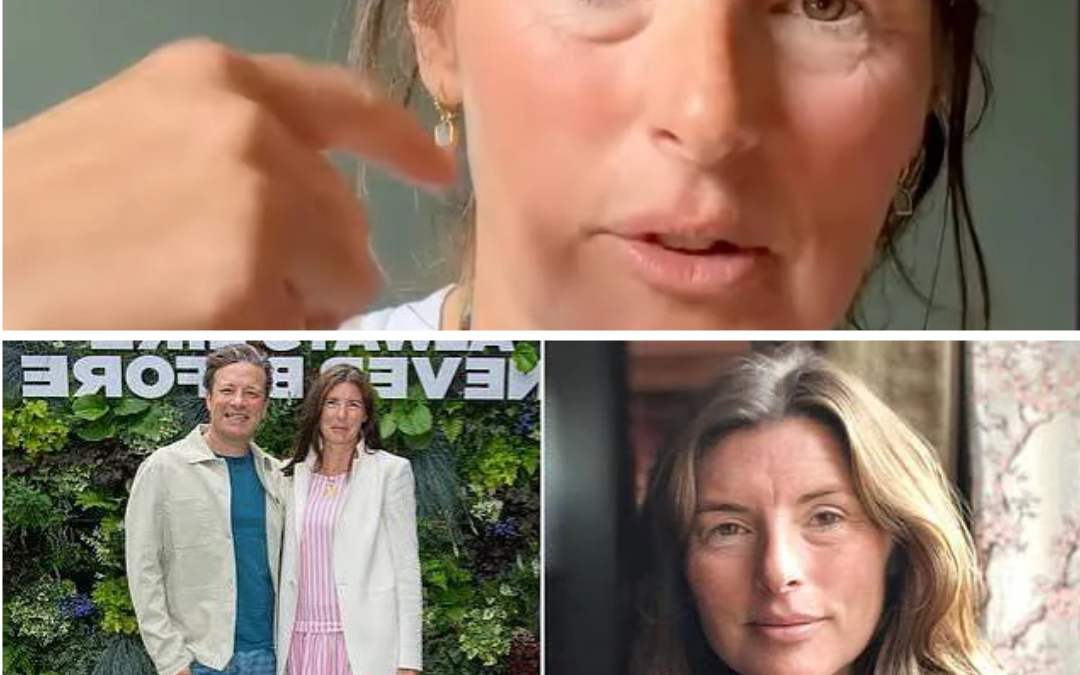
Jools Oliver Says Decades Without Understanding Her ADHD “Ruined” Her Life as She Opens Up About Autism
In a new podcast interview, the designer and mother of five describes a late diagnosis, anxiety about medication and the experience of raising children in a neurodivergent family. Her remarks are a personal account, not a general verdict on ADHD or autism.
Jools Oliver has spoken publicly about being diagnosed with attention deficit hyperactivity disorder (ADHD) and autism, describing the years she spent without an explanation for some of her experiences as exhausting. The 51-year-old designer, who is married to British chef Jamie Oliver, discussed the diagnoses on the podcast Lessons From Our Mothers, in an episode released on October 25, 2026. Her account was reported the following day by The Independent and other news organisations.
The programme’s official episode page carries a headline drawn from Oliver’s words about 45 years of her life. In the interview, she said that not knowing how to understand her difficulties had taken a considerable toll. She also spoke about her children, her feelings in social situations and the different questions raised by menopause.
A personal account on Lessons From Our Mothers
The episode features Oliver in conversation with Cressida Bonas and Isabella Branson, hosts of a programme examining the influence of mothers and other maternal figures. Its Apple Podcasts listing gives a running time of approximately 38 minutes and confirms its October 25 release.
The hosts’ published description says the conversation covers Oliver’s experience of raising five children, supporting them through adolescence and living in a family where members are neurodivergent. It also says she reflected on her father’s stroke during her childhood and what she believes was its impact on her obsessive-compulsive difficulties. That point is presented by the programme as Oliver’s own interpretation, not as an independently established medical cause.
News reports of the interview focused especially on her language about receiving answers later in adulthood. Oliver characterised the experience as draining and difficult, and rejected the suggestion that her ADHD automatically feels like a special advantage. The words “It’s no superpower” were part of her description of her own life. They should not be repurposed as a claim about how all people with ADHD understand their condition.
How she described receiving two diagnoses
According to independent accounts of the podcast published by PA-syndicated reporting and The Sun, Oliver said she was diagnosed with ADHD approximately four years before the October 2026 interview. That places the approximate period around 2022, but her wording did not specify a precise appointment date.
She then explained that autism diagnoses among some of her children prompted her to consider whether similar characteristics applied to her. She sought an assessment and said she, too, was diagnosed as autistic. The order is important: the account describes an earlier ADHD diagnosis and a subsequent recognition of possible autistic characteristics within the family. It does not support describing both diagnoses as happening on one particular day.
Oliver acknowledged that learning more about herself had been valuable while also describing the information as overwhelming. Her remarks did not amount to a simple story of relief replacing confusion. Instead, she presented understanding and difficulty as experiences that could exist at the same time. A label might help explain aspects of her past without automatically removing the challenges she continues to experience.
She has not, in the publicly accessible reporting reviewed here, identified which of her children have specific diagnoses. That distinction is preserved here rather than assigning private medical information to any individual child.
Why the number 45 matters
The phrase about 45 years is an assessment Oliver made looking back at her own life. She is 51, and she spoke of spending much of adulthood and childhood without the explanation she now has. It would be inaccurate to convert her remark into a claim that she was officially diagnosed at 45: by her own account, her ADHD diagnosis came about four years ago, when she was in her late forties.
Her late recognition is consistent with a broader issue acknowledged by British health guidance, although that general context cannot explain her individual diagnostic history. The NHS guide to ADHD in adults says the condition is thought to be identified less frequently in women than in men, partly because inattentive symptoms can be harder to recognise. National clinical guidance from NICE likewise asks professionals to be alert to ADHD being overlooked in girls and women.
Those sources help explain why a discussion about recognition in adulthood is newsworthy. They do not prove precisely why Oliver’s symptoms were not identified sooner. No clinician involved in her care has provided a verified explanation in the reporting examined for this article.
Her concerns about ADHD medication
Oliver told the podcast that she had been given medication for ADHD but was reluctant to take it. She attributed that decision to health anxiety and fears about what might happen after taking the medicine. The statement concerns her own treatment choice and should not be interpreted as evidence that ADHD medication is generally unsafe or inappropriate.
Her remarks also leave several questions unanswered. The reports do not establish the name of the medication, dosage, whether she has since discussed alternatives with her prescriber or whether her decision has changed. They do not provide a medical assessment of the risks and benefits in her particular case. It would be misleading to fill in any of those details from assumptions about commonly prescribed treatments.
The NHS explains that treatment for adult ADHD may include changes to daily routines, adjustments at work, talking therapies or medication, depending on individual needs. It says medicine should be initiated and monitored by an ADHD specialist. The NHS also makes clear that not everyone needs or wishes to use medication. That general guidance provides context for Oliver’s comments without prescribing a course of action to her or readers.
Revealing the news to family and friends
Oliver said she chose to share information about her neurodivergence with relatives and friends through the invitation to her 50th birthday celebration in 2025. She used the invitation to explain aspects of herself that guests might not have understood. The Independent and Entertainment Daily both reported that part of the interview.
The accounts describe an unusually accommodating approach to the party. Guests were told they did not need to manufacture an excuse if they could not attend, that leaving without saying goodbye was acceptable, and that casual clothing, including pyjamas, was welcome. Those details were described in coverage of Oliver’s own explanation; they should not be enlarged into a fictional scene of how recipients reacted.
Oliver also spoke about feeling anxious in social settings despite sometimes appearing outgoing. Her account makes clear that an observer’s impression of someone’s sociability may not match the person’s private experience. It does not justify diagnosing another individual on the basis of whether they enjoy gatherings or avoid them.
Questions about menopause and emotions
The interview also touched on menopause. Oliver described experiencing emotions intensely and said she sometimes found it difficult to tell how much of what she was experiencing related to neurodivergence, how much might relate to menopause and what might be part of her individual personality. She described the combination as especially challenging, but did not offer a formal medical conclusion assigning particular symptoms to one cause.
That uncertainty is important to preserve. It would be wrong to state that menopause caused a documented deterioration in her ADHD or autism, or that her diagnoses caused every emotional experience she mentioned. Her remarks were questions she was asking about her own life.
The National Autistic Society’s guidance on menopause notes that research into autistic people’s experiences during menopause remains limited. It summarises studies suggesting that some people may encounter changes in sensory experience, emotional regulation, planning or social interaction. Those findings are general and cannot establish which effects, if any, apply to Oliver.
Parenting in a neurodivergent household
Family life is central to the podcast episode. Oliver and Jamie have five children, a fact repeatedly confirmed in public interviews and coverage of their marriage. The official podcast description identifies the challenges of raising teenagers and the importance Oliver places on the siblings’ relationships as major themes of her conversation.
According to reporting on her remarks, Oliver said recognising similar experiences in some of her children helped her understand them better. She described a stronger sense of mutual understanding with those who had received autism diagnoses. That is her reported experience within her own family; it should not be generalised to imply that a parent must share a child’s diagnosis to provide effective support.
She also spoke about the deep concern she feels for her children. Reporting of the episode describes her discussing worry that can continue into the night. Those remarks belong to her personal account of parenting, rather than proof that the worry is caused by one specific diagnosis.
Oliver has professional interests beyond her family role. She is a childrenswear designer associated with the Little Bird by Jools Oliver range. The retailer’s official brand page describes a collection influenced by memories of 1970s and 1980s clothing. That independently documented work is worth noting because she is a public figure in her own right, not solely through her husband’s television career.
What Jamie Oliver said before her interview
Jamie Oliver had spoken about neurodivergence in his family before Jools publicly named her specific diagnoses. During an appearance on Davina McCall’s Begin Again podcast in September 2025, he discussed his wife, their relationship and family life. The official episode listing confirms the broadcast and identifies the relevant family discussion.
News reports of that interview quoted him praising Jools’s kindness, humour and instincts while acknowledging that neurodivergence brought challenges to her life. He called her the family’s rock. His statements were supportive descriptions from a husband; they were not a substitute for Jools speaking about her own diagnoses, which she did in the newer interview.
The couple married in 2000 and renewed their vows in the Maldives in 2023, as reported by ITV News. Their long marriage and shared parenting responsibilities provide context, but they cannot establish private feelings or conversations that neither has described publicly.
What can—and cannot—be concluded
Oliver’s account can be understood alongside official clinical guidance without treating a celebrity interview as medical advice. The NHS advises adults who believe ADHD symptoms are affecting their work, relationships or daily life to discuss them with a GP. Specialist assessment considers symptoms over time, including childhood history and possible overlapping conditions. It is not based on a single personality trait or a social-media checklist.
The wider lesson is about accuracy in discussing an individual’s experience. The diagnosis and the difficulties she described are reported as her own disclosures. Her fears about medication are not evidence of medication safety. Her questions about menopause are not a confirmed causal explanation. Her references to family members do not authorise outsiders to identify particular children or speculate about their health.
What is firmly documented is that Jools Oliver chose to discuss two diagnoses, explained the prolonged uncertainty that preceded them and described the different ways the information has affected her understanding of herself and her family. She did so in a podcast whose focus was on motherhood, relationships and the experiences people carry through life.
The most faithful account neither minimises her words nor broadens them beyond what she said. She described a difficult personal history and an ongoing process of understanding it. The public can hear that testimony without turning her private medical decisions into a universal rule—and without assuming that the full story of her health is contained in one interview.
Source note (checked October 26, 2026): This article draws on the original Lessons From Our Mothers episode listing, The Independent’s reporting, a separate account of the interview, Jamie Oliver’s 2025 podcast appearance, NHS guidance, NICE guidance and information from the National Autistic Society. The podcast’s complete audio transcript was not available as verified text in the sources reviewed. Direct statements are therefore attributed to the published interview reporting; no unverified clinical, family or treatment details have been added.
You Might Also Enjoy


A striking argument from prosecutors has become one of the final talking points in Russell Brand’s high-profile London trial